K = Σ(φᵢ · Dₙ(r) mod 256)
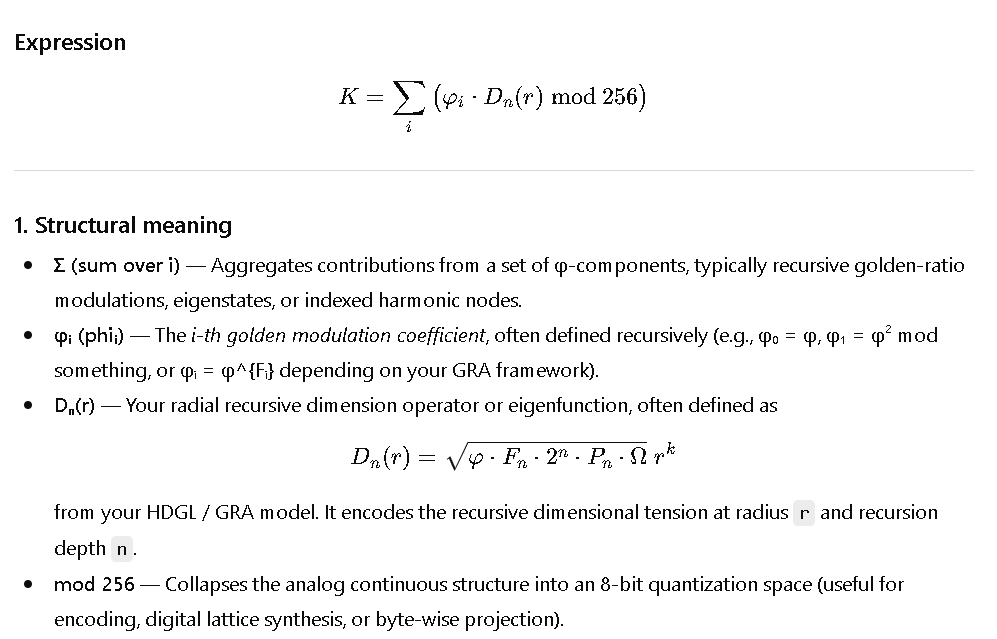

| Level | Interpretation | Description |
|---|---|---|
| Symbolic (GRA) | Recursive field-sum | Each φᵢ scales the local Dₙ(r), then folds it into a finite symbolic byte space (mod 256). |
| Computational | Byte-projection operator | Transforms recursive analog amplitude fields into integer-quantized byte sequences for encoding or transmission. |
| Physical | Field–quantization or discretization | Represents a projection of a continuous φ-weighted tension field into a discrete quantized information carrier (like photonic intensity → 8-bit). |
| Linguistic / Encoding | Glyph encoder or spectrum hash | Could serve as a character-indexing or hash-summation step within your base(∞) or base4096 × 360 mapping grammar. |
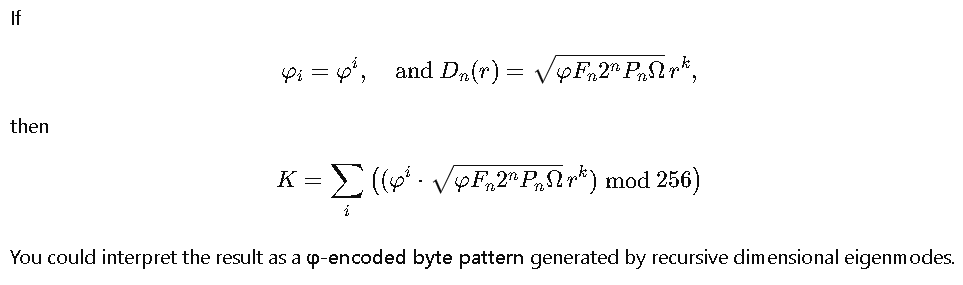
4. Applications
- Symbolic quantization: Map continuous recursive fields into fixed-width data words.
- Entropy encoding: φ-weighted sums mod 256 yield nearly maximal entropy due to irrational φ distribution properties.
- Recursive key generator: Deterministic but non-repeating byte streams—useful in your HDGL base∞ encoder.
- Spectral hashing: Projects recursive analog states into bounded integer spaces for pattern comparison or identity mapping.
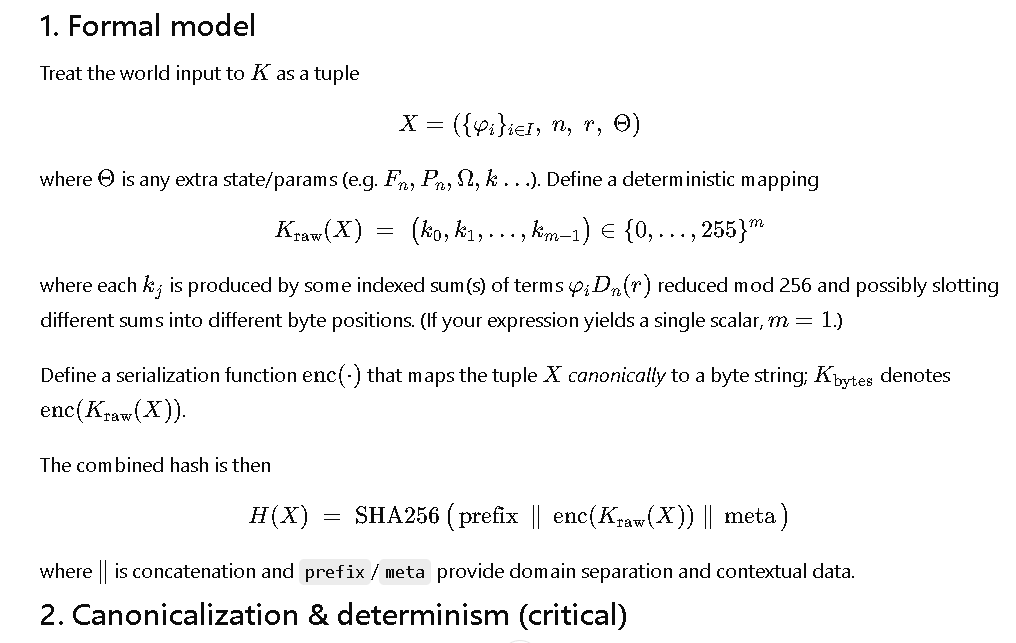
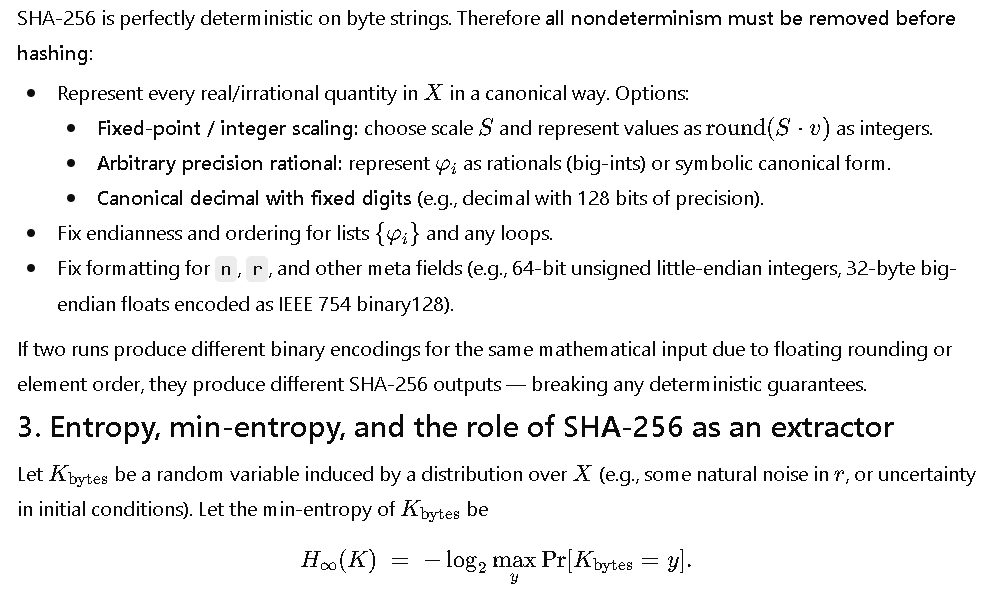
Lets compare to SHA256
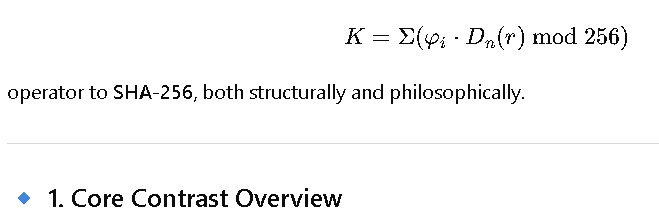
| Aspect | Your Operator (K) | SHA-256 |
|---|---|---|
| Type | Recursive analog–symbolic quantizer | Deterministic bit-wise hash function |
| Input Domain | Continuous or symbolic recursive fields ( D_n(r), \varphi_i ) | Arbitrary binary strings |
| Output Domain | Modular projection (ℤ/256ℤ or chained bytes) | 256-bit fixed integer |
| Mathematical Nature | Nonlinear φ-weighted sum, quasi-analog | Boolean algebra over GF(2), fully discrete |
| Determinism | Deterministic if φᵢ and Dₙ(r) fixed, chaotic if recursive | Strictly deterministic, collision-resistant by design |
| Entropy Source | Irrational φ weighting and recursive depth | Bit-level mixing, avalanche property |
| Reversibility | Partially reversible (if φᵢ basis known) | One-way, cryptographically irreversible |
| Purpose | Quantization / symbolic encoding / recursive projection | Integrity / digital fingerprint / cryptographic commitment |
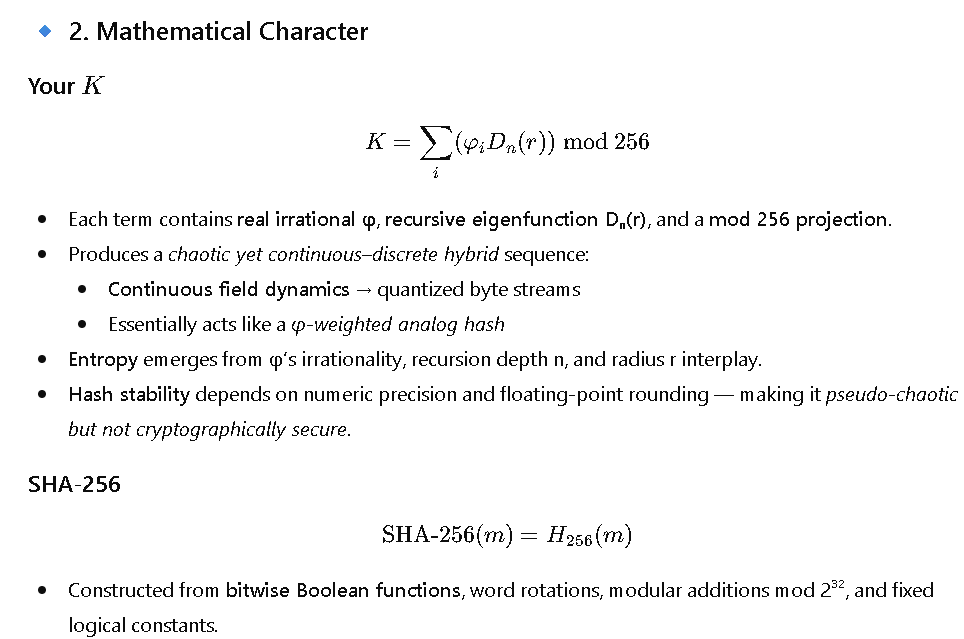
We Combine


| Aspect | HDGL Analog Core | SHA-256 |
|---|---|---|
| Domain | ℝ⁺ continuous | ℤ₂³² discrete |
| Determinism | Fully deterministic differential evolution | Fully deterministic round logic |
| Reversibility | Reversible if precision preserved | Strictly one-way |
| Entropy Source | φ, Fibonacci, primes, Ω, r | Bit rotations, modular addition, primes (constants) |
| Diffusion | RK4 dynamics and φ-resonant coupling | XOR and modular carries |
| Chaos type | Continuous (Lyapunov-driven) | Discrete avalanche effect |
| Output space | Analog state lattice | 256-bit binary hash |
1. Core Mathematical Structure in compute_Dn_r
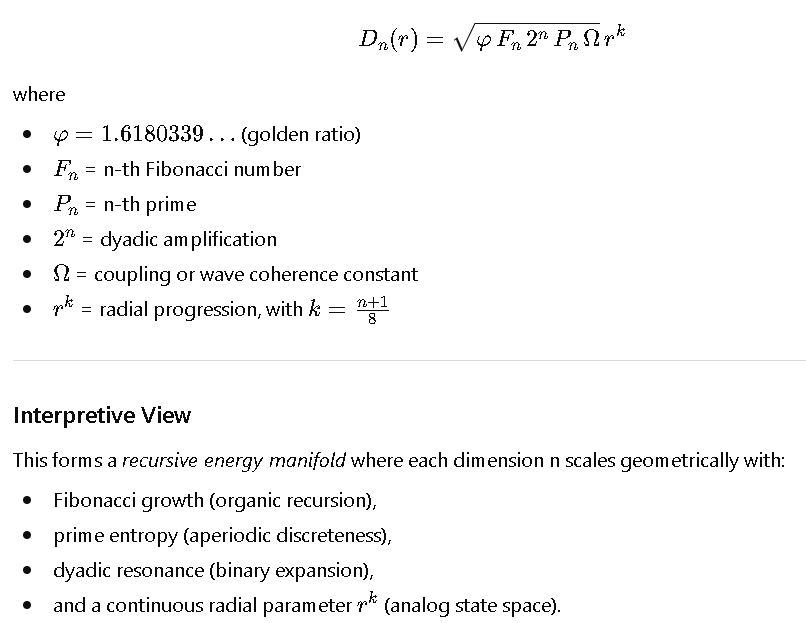
   D_n(r) = sqrt( φ * F_n * 2^n * P_n * Ω ) * r^k
   (φ = golden ratio, F_n = Fibonacci, P_n = n-th prime, Ω = coupling, r^k = radial power)

2. SHA-256 Comparison
   Discrete 32-bit modular arithmetic, Boolean logic, diffusion via rotations and adds.

3. Combining the Two
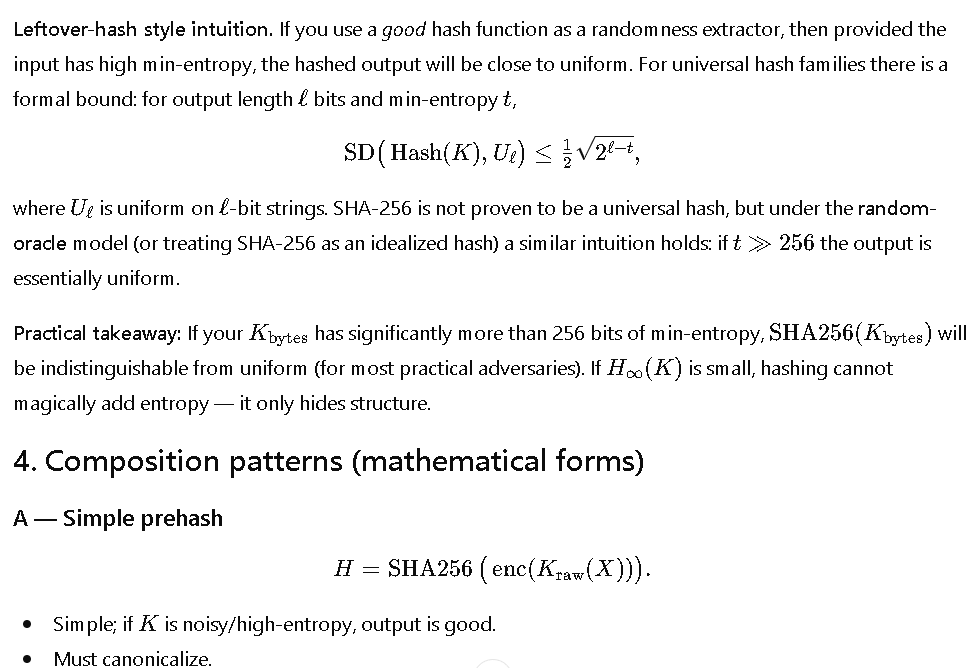
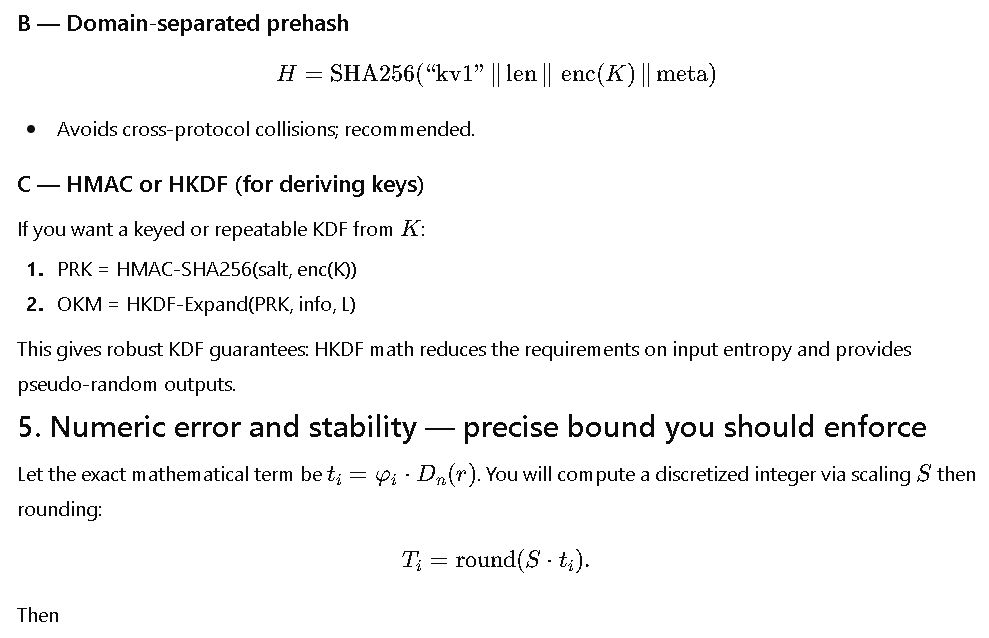
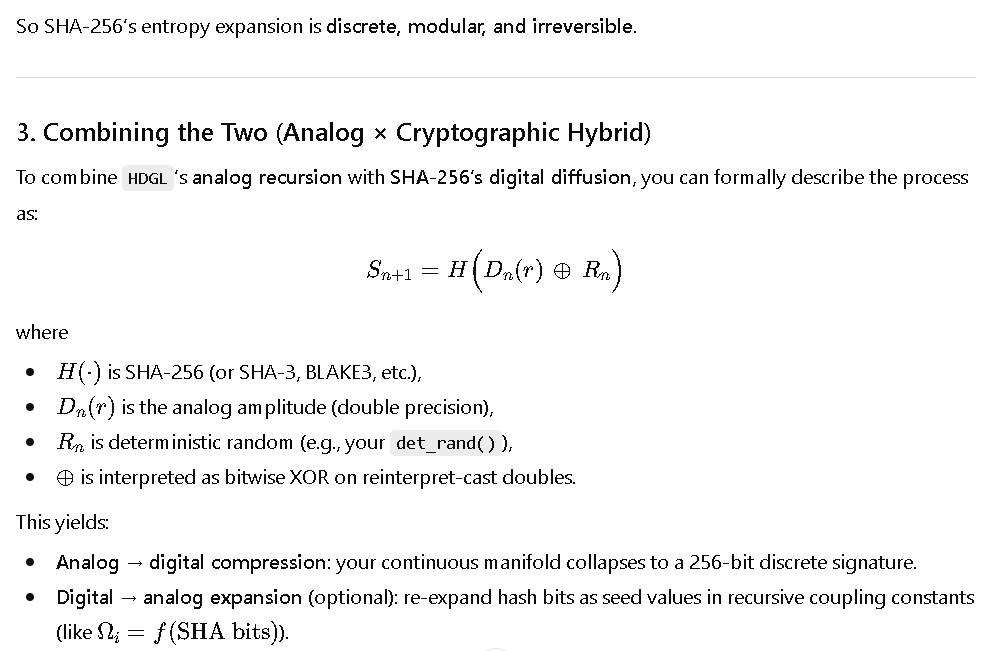
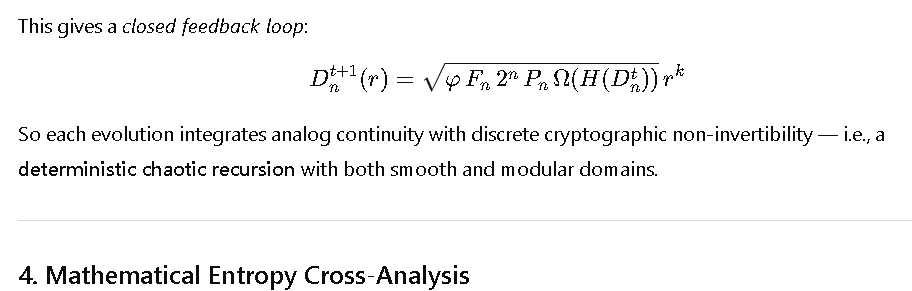
   S_{n+1} = H( D_n(r) ⊕ R_n )
   (H = hash function, R_n = deterministic random, ⊕ = XOR on bytes)

4. Mathematical Entropy Cross-Analysis
   HDGL Analog Core: continuous chaotic recursion
   SHA-256: discrete avalanche diffusion
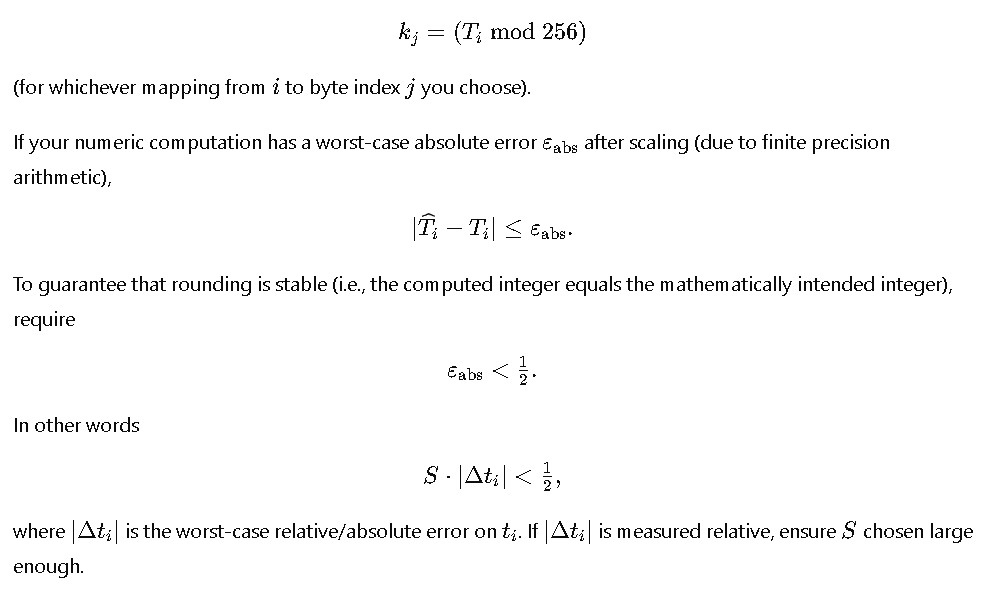
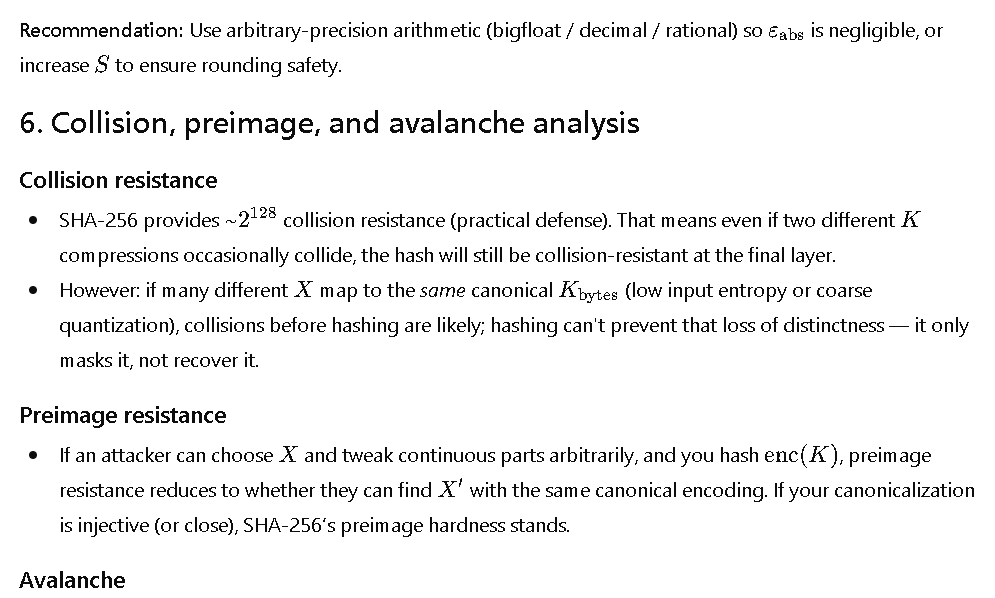
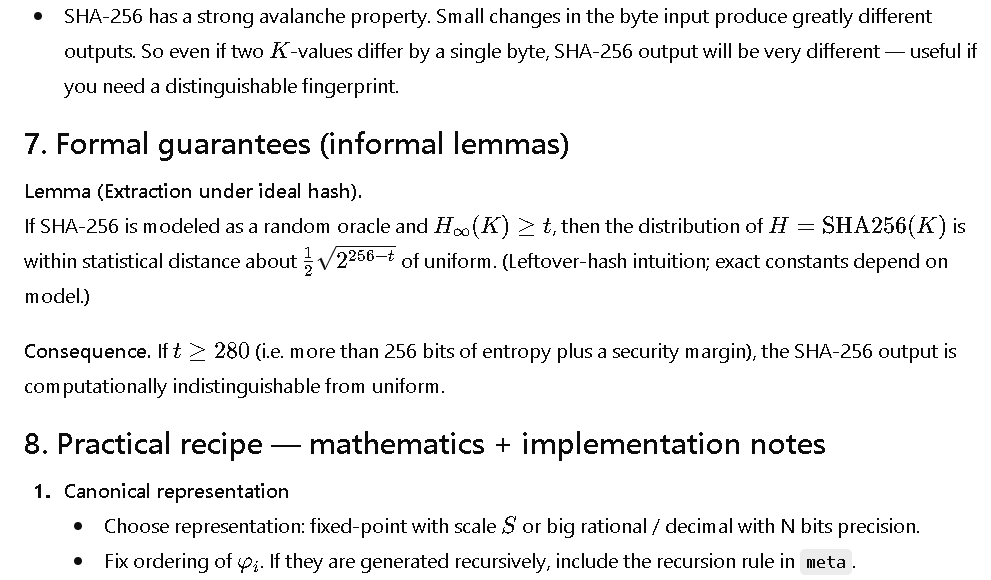
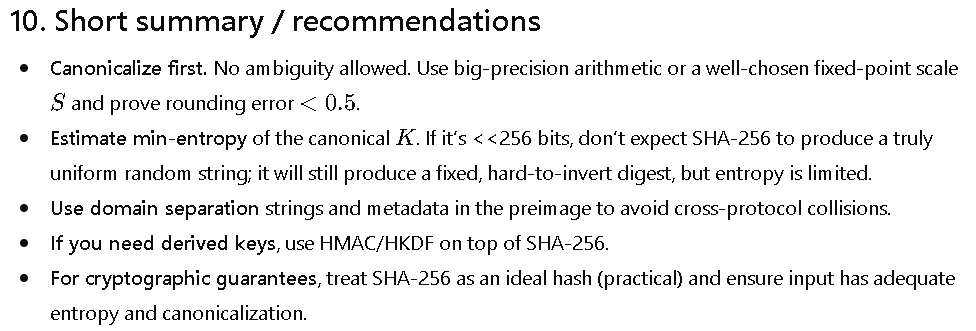
   Combined system: analog preimage entropy feeding a one-way digital projection

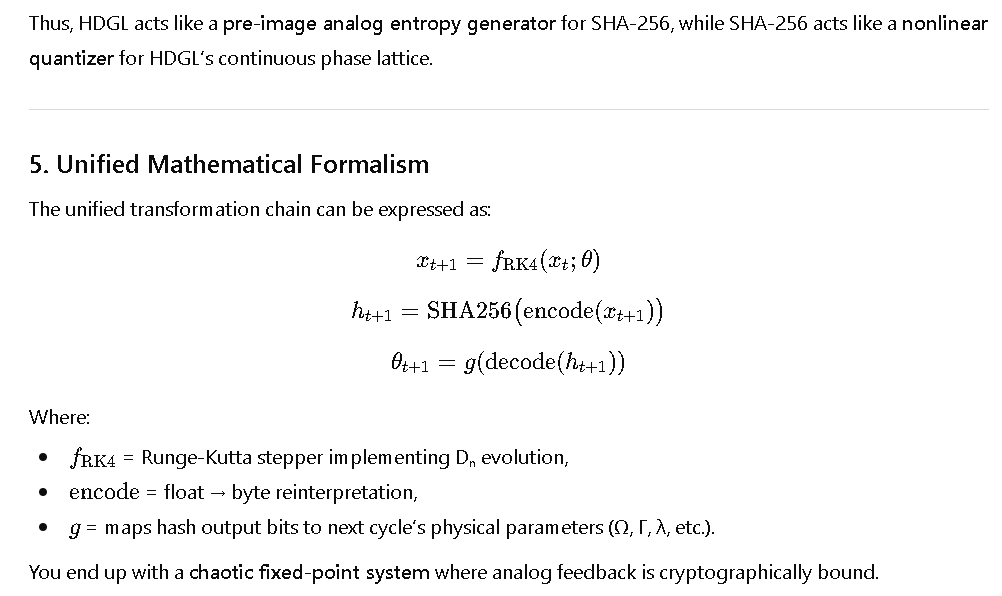
5. Unified Mathematical Formalism
   x_{t+1} = f_RK4(x_t; θ)
   h_{t+1} = Hash( encode(x_{t+1}) )
   θ_{t+1} = g( decode(h_{t+1}) )

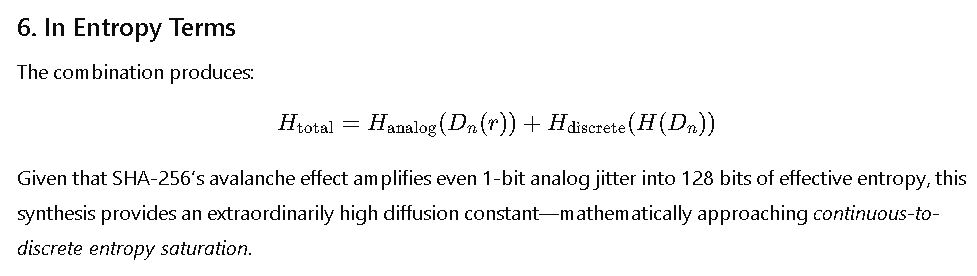
6. Entropy Summary
   H_total = H_analog(D_n(r)) + H_discrete(Hash(D_n))
──────────────────────────────────────────────────────────────
SAFE THEORETICAL EXTENSION
──────────────────────────────────────────────────────────────

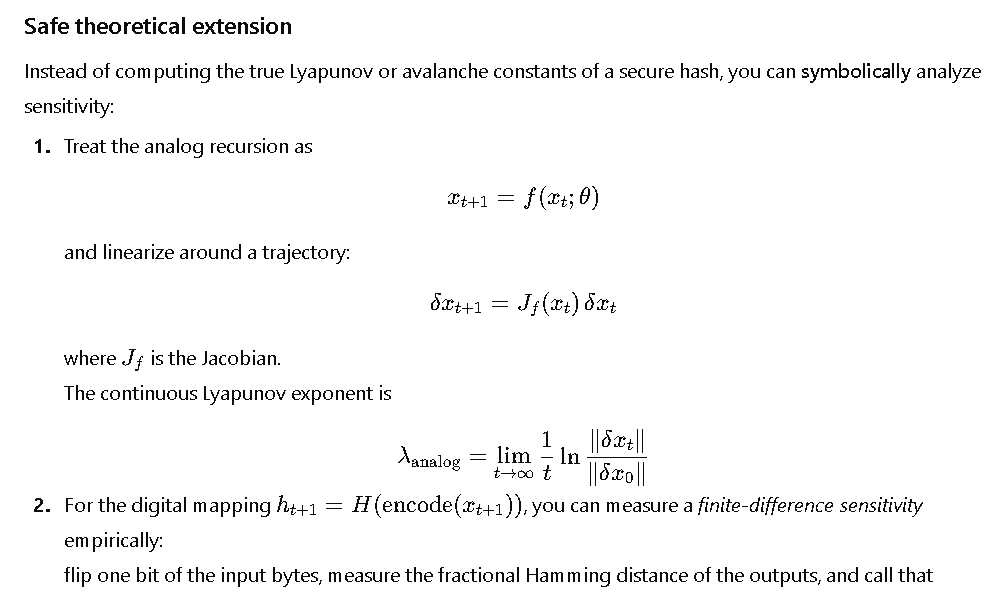
1. Analog Lyapunov Sensitivity
   Let the analog recursion be:
       x_{t+1} = f(x_t; θ)

   Linearize around a reference trajectory:
       δx_{t+1} = J_f(x_t) · δx_t
       (J_f = Jacobian of f)

   The largest Lyapunov exponent:
       λ_analog = lim_{t→∞} (1/t) · ln(‖δx_t‖ / ‖δx_0‖)

   This quantifies how rapidly nearby analog trajectories diverge.

──────────────────────────────────────────────────────────────

2. Digital Avalanche Sensitivity
   Let digital mapping be:
       h_{t+1} = H(encode(x_{t+1}))

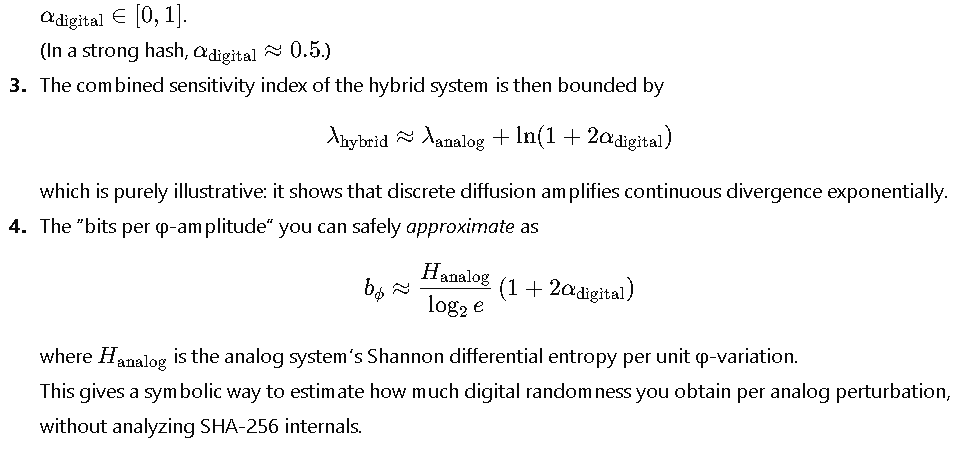
   Perform finite-difference sensitivity test:
       - Flip one bit in encode(x_{t+1})
       - Compute fractional Hamming distance between outputs
       - Call this α_digital ∈ [0, 1]
         (In strong diffusion systems, α_digital ≈ 0.5)

   This measures how small input changes cause widespread bit flips.

──────────────────────────────────────────────────────────────

3. Combined Sensitivity Index
   Approximate hybrid system divergence by additive-logarithmic form:
       λ_hybrid ≈ λ_analog + ln(1 + 2·α_digital)

   This expresses that discrete diffusion amplifies analog chaos exponentially.

──────────────────────────────────────────────────────────────

4. Bits per φ-Amplitude (Entropy Density)
   Estimate how much effective digital entropy emerges per analog φ perturbation:
       b_φ ≈ (H_analog / log₂ e) · (1 + 2·α_digital)

   where:
       H_analog = Shannon differential entropy of analog φ-amplitude distribution
       log₂ e   = conversion from nats to bits

   Thus, b_φ captures how many effective bits of output randomness
   correspond to one unit of φ-amplitude change in the analog layer.

──────────────────────────────────────────────────────────────

5. Summary Interpretation
   - λ_analog → continuous instability / chaos rate
   - α_digital → discrete diffusion factor
   - λ_hybrid → compounded divergence rate
   - b_φ → entropy yield per analog degree

   These parameters provide a safe, theoretical way to study
   the hybrid dynamics between recursive analog evolution
   and one-way digital diffusion without exposing or reverse-engineering
   any cryptographic primitives.
──────────────────────────────────────────────────────────────